The misinformation gap: why cancer myths are costing your employees, and what employers can do about it
Read time:
7
mins

Kelly McCabe
Co-founder & CEO, Perci Health
This week is Cancer Prevention Action Week, and the World Cancer Research Fund (WCRF) has launched its 2026 campaign under a banner that states what so many of us working in cancer care have been thinking for years: ‘Science Not Fiction’.
What’s the relationship between fiction and cancer? The WCRF’s own research highlights that despite the fact that 4 in 10 UK cancer cases are preventable through lifestyle change, 44% of patient-facing NHS staff are asked about inaccurate or misleading nutrition and supplement claims at least once a week. And they warn that misinformation can distract people from proven prevention behaviours, such as eating well, being active and reducing alcohol.
Misinformation is not a fringe problem. Those who work in primary care, from NHS trusts to GP surgeries encounter it every day, as do Perci Health professionals. This means that, whether employers know it or not, misinformation will have been consumed and believed by at least a portion of their employees.
What our data shows
Our digital cancer risk assessment — completed by working-age adults across our member base and covering the lifestyle factors with the strongest links to cancer risk — paints a picture that should concern every employer and insurer.
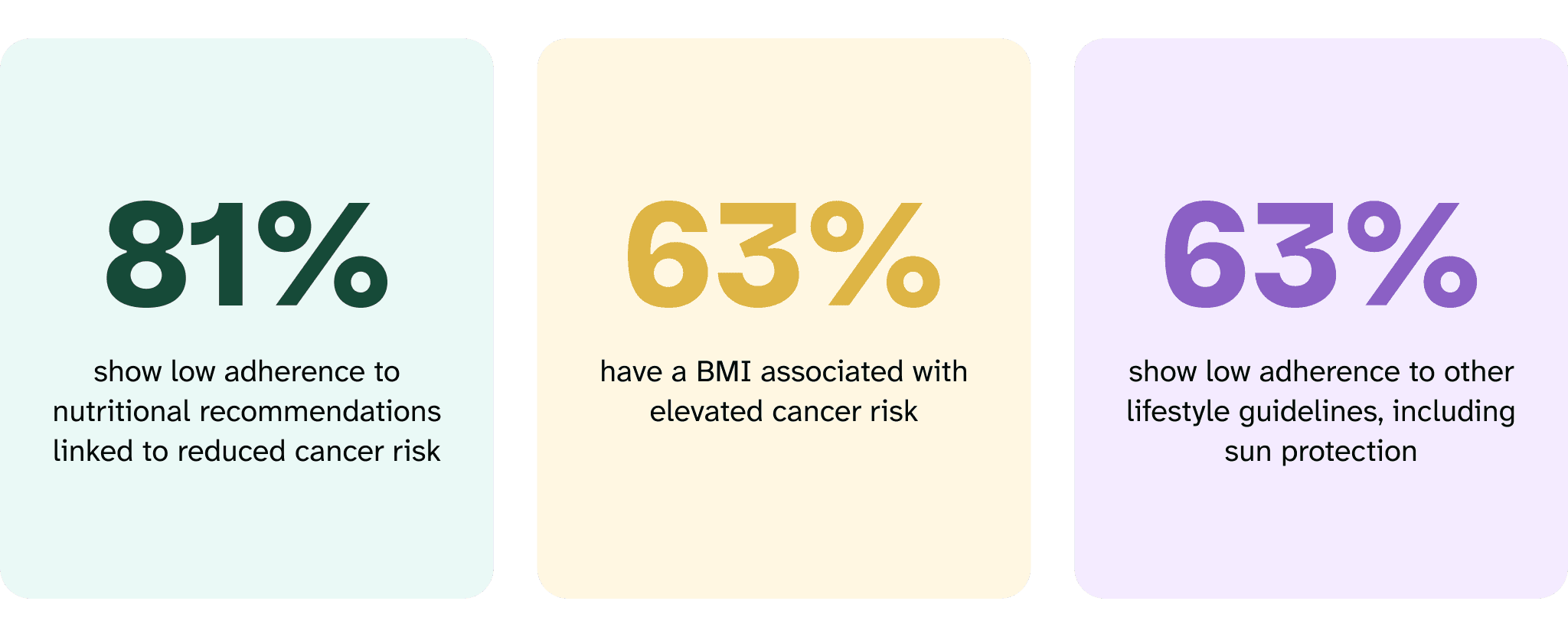
These are not figures that reflect a lack of concern about cancer. Rather, they reflect a population unaware of and/or unable, to make and maintain changes that can reduce personal risk. Misinformation caused by conflicting advice and the sheer volume of unregulated health content circulating online is likely to be at least partly to blame.
Our Generation Risk report, which surveyed 2,000 working-age adults, found that only 24% of under-35s recognised diet as a cancer risk factor. Men aged 25 to 34 were the most likely of any group to believe that no lifestyle factors at all are related to cancer risk, despite belonging to the age group seeing the fastest rise in cancer incidence globally.
As a former oncology dietitian, this is what worries me most.
When trust isn’t enough
Nutrition is one of the areas where cancer misinformation spreads fastest. Online cancer content heralds diets that can 'starve' cancer, supplements that can prevent recurrence, entire food groups that, when eliminated, can improve someone’s odds. Some claims sound credible; some are shared by well-meaning friends and family, yet many are clinically inappropriate and, in some cases, can cause real harm.
The TRUST Test, which asks people to question whether health advice online is Too good to be true, Research-backed, Understood and Source-quality, and urges people to ‘Think before they share’, is a genuinely useful tool. But for many people, particularly those recently diagnosed or in active treatment, a framework for evaluating information is not enough. They need access to qualified experts who can help them understand what information means for them.
We know this is true because we see it playing out in our clinical data. At Perci, dietetics is the second most accessed service after psychology, accounting for 28% of all appointments. Nutritional myths, supplement questions, restrictive diets and what to eat during or after treatment are among the most common reasons people seek support from our nutrition team. Myth-debunking features in 92% of our nutrition consultations.

For cancer prevention, the evidence points to sustainable lifestyle factors: a balanced, fibre-rich diet with plenty of fruits and vegetables, maintaining a healthy weight, reducing alcohol and being physically active. For people living with or beyond cancer, the right nutritional advice is often very different, and it depends entirely on diagnosis, treatment, symptoms and wider health needs. That is exactly why specialist support matters.
Lack of adherence to advice that reduces cancer risk, driven by misinformation, isn’t limited to the pre-diagnosis phase. The problem continues for people already living with or beyond cancer. At a time when this cohort is most vulnerable and actively searching for answers, online misinformation can lead to behaviours with serious consequences.
The role employers can play
Employees are already searching for information about cancer risk, nutrition, screening and symptoms. Employers, therefore, have a real and largely untapped opportunity to make sure the information they find is credible and evidence-based.
This week matters — but the need does not end on Sunday
Cancer Prevention Action Week is a valuable moment to focus attention on the problem of misinformation and on the lifestyle factors that can genuinely make a difference to cancer risk. However, the gap between what the evidence says and what working-age adults believe about cancer risk exists every week of the year.
Closing that gap requires more than a one-week campaign. It requires employers, insurers and benefits providers to build the kind of sustained, specialist-led cancer support that helps people find the right information at the right time — before a diagnosis, during treatment, through recovery and beyond.
Links & notes
Perci Healths Generation Risk report
WCRF TRUST Test and Science Not Fiction campaign
This article references the WCRF press release issued for Cancer Prevention Action Week 2026.

Previous article
Read time:
5
mins